Posts Tagged ‘ game ’

Alias: Deniable Plausibility

Posted on April 1st, 2025 Comments Off on Alias: Deniable Plausibility

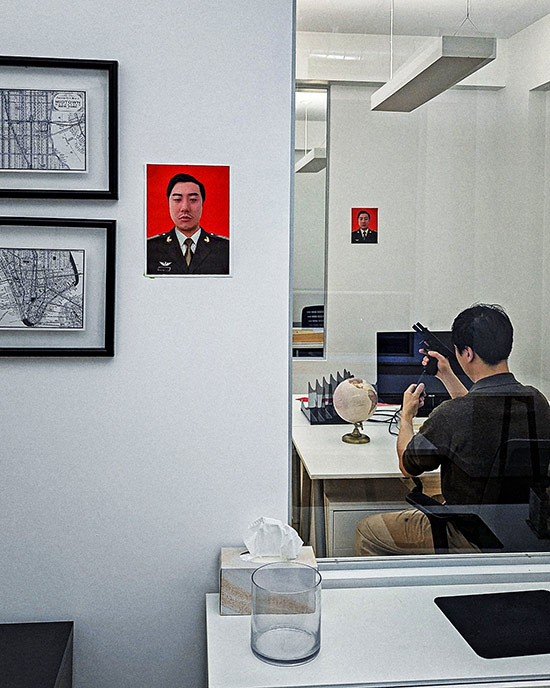
In my search for spies and espionage in Toronto I came across something called Deniable Activity. It’s basically a pricey LARP whose latest event was described as, “a covert operation in Toronto to oppose a Chinese-Russian paramilitary unit and discover a leak within the Blackline organization.

The “Blackline organization” is an obvious take on Blackline Simulations, the company behind Deniable Activity. Blackline seems to specialize more in military simulations and the Deniable event appears to have been their first espionage-themed outing. It sounds like they put some effort into it, although calling the first installment “The Compromise” seems a little derivative, maybe even like someone caved during planning. Still …

We’ve been able to include vehicle pursuits, helicopter trips, installing audio and video surveillance, clandestine entry into residences, and simulated gun fights in a number of events.

https://www.deniable.ca/frequently-asked-questions

The fact that this event exists got me to thinking … what if a simulated urban spy adventure was infiltrated by actual spies and hijacked for nefarious purposes (until the good guys figured out what was going on and thwarted it). You’re welcome, Hollywood.

There are some event photos available online and kudos to the organizers for location selections. Ultimately, the event seems fun albeit a little contrived. Not sure how much it costs per person and prices aren’t otherwise broadly mentioned but a 6 hour “Covert Entry and Surveillance for Teams” event is listed at a starting price of $3,500.

Deniable appears to be headquartered in a squat, industrial, red brick building in northern York (a.k.a. Toronto), although this is somewhat questionable since the listed address of “51 Vine Road” seems to be a little farther north.

That’s all the information I have regarding the target at this time.

Filed under: Dispatches, Patrick Bay, Pictures

CypherPoker.JS needs a team!

Posted on June 10th, 2019 Comments Off on CypherPoker.JS needs a team!

In case haven’t mentioned it before, over the past few years I’ve been working on an open-source project called CypherPoker.JS

It’s a decentralized, soon to be anonymous, truly peer-to-peer Texas Hold’em platform that incorporates blockchain technologies and a unique cryptosystem named SRA (based on a MIT research paper from the late 70s), which remove the need for trusted third parties and the things that go along with them: rakes / high fees, censorship susceptibility, etc.

To the best of my knowledge, to date there’s nothing out there like this.

The “.JS” part means that the software is written in JavaScript for the modern browser, Node.js, and Electron. Basically, it runs on almost any device or operating system and yes, there’s a web demo you can try right now (or download the desktop version if you prefer).


A Short History


After building the core game engine and a basic but extensible UI I incorporated Bitcoin, pumped up the software’s peer-to-peer capabilities, and most recently added support for Bitcoin Cash. Because creating a team was the plan from the get-go I spent plenty of time documenting everything along the way.

There’s plenty more in store for CypherPoker.JS but it’s at a point now where I’m not sure I can continue to do it all on my own in a reasonable amount of time.So I’m reaching out to YOU, that person who thinks that this is a pretty kick-ass concept-turned-prototype that they’d like to be associated with. It has the potential to transform the online gaming industry, not just poker. Yes, this is that early stage project you’ve been waiting to join.


“I’m in! What can I do?”


Now, I get that not everyone’s a coder or designer and there are many shoes that need to be filled if this project is going to continue to grow at a healthy rate. Here are some suggestions:

  • Exposure / Hype

Most social networks have a way to bring posts to prominence. These may include sharing, re-posting / cross-posting, liking, upvoting, plussing, starring. or otherwise showing approval or providing additional exposure. There’s a good chance that you can do that you can do one of these things right now and that it’s probably really easy.Also watch for new releases, updates, and upcoming stuff. Share whatever you think is interesting.

  • Developers & Interactive Designers (UX / UI)

Modern (ECMAScript 2017) JavaScript, HTML5 / CSS3, browser, Node.js, Electron. Make GitHub pull requests with any important / useful / cool things. Some suggestions.

  • Players & Testers

Give it a try! Make a free test account (no sign-up required), get some free testnet Bitcoin or Bitcoin Cash and make a deposit (instructions on the site). Once the deposit is confirmed you can transfer it to other accounts, including new ones that you create. Be aware of this outstanding issue if you want to use Bitcoin or Bitcoin Cash proper.

If you find problems, feel free to post them on the subreddit (or DM), tweet about them, or post them directly to the GitHub issues system where they should eventually end up anyway (you can use a free account). I also do email.

  • Evangelism

Spread the gospel of peer-to-peer poker.Get to know its deeper inner truths. Play it, praise it, grow the flock!

  • Donations

Those would help a lot, actually. My laptop’s been acting up and I’ll probably need a new one soon. I also don’t have regular internet access; makes working on this project challenging.

Bitcoin: 18yWpM7CnYox58YMJ2iVa1aJZCs1sufPhg

Bitcoin Cash: bitcoincash:qrgzc6nf6275er7k04tjwauf4ptm9mw9qcaq6fceup

  • Host a Node / Distribute the Code

If you have some web server space or Node.js / PHP+MySQL hosting please consider hosting a node. Limits have been built into the software (e.g. max database size), so you don’t have to worry about it unnecessarily eating up resources. DM or email me for details.

  • Sponsorship

Tournament funding and advertising are two immediate ideas that spring to mind but if you have any other sponsorship ideas I’d be happy to discuss them. Please contact me via DM or email.

  • Quid Pro Quo

Perhaps you need a hand with one of your projects? Maybe you’d like a few guest blog posts? Possibly there’s some other reciprocal arrangement you’d like to propose?Contact me via DM or email to hash out the details.

Filed under: B Sides, Patrick Bay

Made in Toronto: CypherPoker.JS v0.5.0 (Ollie)

Posted on May 31st, 2019 Comments Off on Made in Toronto: CypherPoker.JS v0.5.0 (Ollie)

If ever there was a reason I don’t post to TCL as often as I should this would certainly be it. It’s online Texas Hold’em that uses cryptocurrencies like Bitcoin, and its younger cousin Bitcoin Cash, for betting.

You may recognize the project from the link to the right and I’m sure I’d mentioned it in a previous post or two.

One thing that makes CypherPoker.JS truly unique is that it’s peer-to-peer, meaning that players can play directly against one another without any trusted middleman to “deal” the cards, hold buy-ins, and make sure games are played correctly / fairly.

The challenge in peer-to-peer online poker is a lot like playing the game over the phone against someone you don’t really trust and without relying on some other person to conduct the game — let that problem of how that would work percolate on the old noodle for a bit. Spoiler alert: it’s possible using clever math.

The other thing that makes CypherPoker.JS unique is that it’s a white-label software product which simply means that it’s well-documented and built to be altered, re-branded, and re-packaged: one’s very own, online, public and / or private poker room(s). Because it’s peer-to-peer there’s basically no extra hardware or services to invest in (a website is entirely optional), and because the it’s open-source the software is free. I’m sure that there are people out there who would still find a way to complain about the $0 price tag but in all fairness those people are dumb.

This is the second iteration of the project and it uses JavaScript, the popular programming language of web browsers. There’s a bunch of JavaScript behind the scenes right here at TCL too; it’s what makes websites do stuff instead of just sitting there.

But it doesn’t matter if you know anything about JavaScript because I wrote the thing to be used, not (necessarily) admired for its programming elegance.

You can use CypherPoker.JS right in your web browser or you can download an installer for Windows and play that way. Linux and macOS are also supported but since I don’t have any extra computers lying around that run those operating systems you’d need to build the software by hand using my Do-It-Yourself in 5 easy steps! guide.

No Bitcoin? No problem! Just select the “testnet” version of the cryptocurrency for a 100% free alternative.

I mean, really, at this point you have no excuses to not try it out.


I usually do a lengthier post on Medium detailing each new version and in the most recent one I eulogize a dearly departed friend (hence the bracketed homage).

There’s also a dedicated subreddit where you can ask questions or post comments. I love chatting about the project so I promise that there’s literally no question / comment too basic that you could post and that I wouldn’t happily and courteously answer.

Finally, there’s a GitHub repository where the actual project lives:

https://github.com/monicanagent/cypherpoker.js

It comes with a nifty project board where I visually organize the project’s progress:

https://github.com/monicanagent/cypherpoker.js/projects/1

Everything on this board comes from a master list of bugs / tasks:

https://github.com/monicanagent/cypherpoker.js/issues

… which are organized in dated milestones:

https://github.com/monicanagent/cypherpoker.js/milestones

Once a milestone is complete I update the web demo:

https://monicanagent.github.io/cypherpoker.js/demo/web/

… and I add download links for the desktop version of the software:

https://github.com/monicanagent/cypherpoker.js/releases

So, other than the nice pictures and witty prose, is there any reason why you’re still here?

Filed under: Dispatches, Patrick Bay

TOTALLY mental poker

Posted on September 19th, 2015 1 Comment

A few weeks ago when the HR lady called me and told me that I too was now among a number of people who had been laid off as a result of “business decisions”, I could scarcely contain my enthusiasm. “That’s great!”, I replied giddily. There was a moment of silence before I caught myself. “I mean, that sucks … terrible .. but it’s great that I know about it sooner rather than later”, I sputtered. Good save.

I clumsily explained that, having spoken to colleagues and being aware of the changes, I could now live without the uncertainty, then swung the conversation back around to me getting fired.

“Yeah, no, that’s bad news,” I assured her but added that the severance would be helpful.

I was lying – I was elated.

Thing is, I’d been working on a project in my spare time that it was probably best to keep hush-hush. So it was. The main complication was the fact that the project is an online poker game and I was – until recently – working for a company that had bought PokerStars. It wasn’t that I was “borrowing” code or secrets or clients or anything like that, and I genuinely liked working for them, it’s just that the whole situation felt complicated.

biermarkt on the esplanade

Besides I just thought that the idea was too damn good to risk any potential roadblocks, especially early on. So I assumed an alias and toned down my writing style.

I was asked why I included a cryptographic identity when I first announced the project on Reddit, and this is why. I was probably being a little too paranoid but so far everyone I’ve discussed it with thinks it’s a pretty darned good idea. I’ve even seen it suggested that if such a thing could be built it would be “super revolutionary“, “so obviously disruptive“, “a killer app“, and other encouraging adjectives, so protecting the work by keeping my identity hidden seemed wise.

I hope you can see how one might foresake blogging for a bit in order to concentrate on such a project, but I did at least hint at it when I was starting to see some solid first results. I wasn’t just talking out of my ass there.

So since we’re at the part of the story where I’m unveiled as the guy behind the project I might as well call it by its real name: CypherPoker.

Okay, so it’s an online poker game, right? So what?

Well, for starters, it really is quite unique, disruptive, and revolutionary – it’s almost entirely bass-ackwards to the way that online poker currently works.

I’m sure that I’m not giving anything away when I say that most online gaming sites operate under a “client-server” model. This means that they own and operate computers with big internet connections that “serve” game information to the players’  computers or “clients”. In effect, games take place almost entirely on the operators’ computers; clients are used mostly to display the results of the games in a nice way.

This makes sense. You can see how it’d be problematic if the clients (players/peers) were to decide how cards should be dealt – someone would just need to hack the software to enable all sorts of cheating. In the client-server approach hackers would have to get at the servers which is much more difficult (but not impossible).

Players must also trust that operators are being fair and honest, and when they are, that they are able to properly monitor their systems for cheating. This has not always been the case.

With CypherPoker this approach is turned almost entirely on its head and in a way that seems paradoxical. For example, players play directly with each other (a.k.a. peer-to-peer) – no servers are needed.

But didn’t I just finish talking about how problematic it’d be if players were allowed to “deal” each other cards over the internet?

Yeah. In fact, the problem was described much more succinctly in a somewhat obscure MIT paper entitled “Mental Poker“:

Can two potentially dishonest players play a fair game of poker without using any cards … over the phone?

Even though this question seems like a real mind fuck, there’s actually a viable solution to the problem and the authors go on to show you how it’s done.

Because the answer uses math (cryptography), and since we’re no longer living in the Dark Ages, substituting “phone” with “networked computing device” is a simple but necessary step; I ain’t doing the calculations on paper!

casa loma

Back when “Mental Poker” was still a fresh and new idea, computers just weren’t capable of handling the kinds of computations needed to play a decent game. I remember reading that a card “shuffle” operation in an early Mental Poker implementation required hours of calculation. Can you imagine how long a single game would last? Yikes! Well, it’s 2015 and modern hardware is finally capable of crunching the numbers in a reasonable amount of time.

Paradoxically, visualizing how the game works requires no math skills whatsoever.

First we need to get our hands on 52 identical, peek-proof lock boxes with a miraculous ability to repel any markings (scratches, dents, paints, decals, etc.) In addition we’ll need 52 identical locks with the same miraculous abilities and one master key to open them all. My opponent, you, also has 52 miracle locks and a key to go with them.

Now I start by distributing the cards in my card deck into the boxes – one per – and lock them all. I mix up the boxes for good measure and call Larry’s Super Courier service to deliver them to you. You soon get the boxes and apply your own locks so that now all of the boxes are double-locked. With the way that each box is secured, either lock can come off first. Even though this is easy to achieve using physical lock boxes (just use a big latch), it’s a very important property – we need to be able to add or remove locks in any order for this process to work.

After being mixed up again the 52 double-locked boxes are returned to me.

Since we’re playing Texas Hold’em, I need to select two private (hole) cards for myself so I simply pick two boxes and send them to you. You remove your locks from them so that only my locks remain. When the boxes are returned to me I remove my locks and extract my cards – simple. Notice that even though I locked all the boxes first, I had to unlock these two boxes last – after you removed your locks. Without the ability to add or remove locks in any order this all wouldn’t work.

Of course you need to repeat this process in order to “unlock” other cards, and there are other types of exchanges that are required for a full card game, but that’s the gist of it.

If we use numbers to represent physical cards – 1=Ace of Spades, 2=Two of Spades, etc. – we can use cryptography to “lock” and “unlock” them. As long as the cryptography is “commutative”, or can be applied and removed in any order, we can effectively play a fair game of poker over a telephone. Or maybe over the internet with a computer to do the calculations and display the results.

The “Mental Poker” idea is plenty cool all by itself but if you throw the serendipitous rise of Bitcoin into the mix, the whole thing starts to take on new dimensions. When you add anonymity via something like Tor or I2P to the game and the associated services (for example, introducing random internet players to each other), the possibilities absolutely blossom.

sunflowers @ jarvis and richmond

CypherPoker is well beyond the idea stage; the game exists and is available to play today. I spent the time writing versatile and solid code so the game is functional but the user interface sucks. However, now that I can drop the alias I can also drop the hammer so we’ll see about getting that and other shortcomings rectified forthwith.

In addition, I’m going to spend more quality time with TCL and my other blog again, partially to prevent any future fears regarding my freedom and well-being, partially to put my new camera to good use (other one disappeared a while back), but also to document and discuss the project’s progress more closely and regularly now that I don’t have to censor my output. I haven’t found any “Mental Poker” implementations that are as far along as mine so it’s hard to say exactly what lies ahead but that tingly feeling in my gut tells me that it’s probably going to be awesome.

Filed under: B Sides, Patrick Bay, Pictures

FloorPig is back!

Posted on June 18th, 2013 Comments Off on FloorPig is back!

FloorPig

Sarah and I have put some love and care into our little mobile game and we’ve now released the first full version!

This edition of our seemingly simple tile-based puzzle game includes 16 tricky levels, and a bunch of fixes and enhancements we won’t bore you with.

Did I mention it’s free?

Try it out now: https://play.google.com/store/apps/details?id=air.olliebit.FloorPig

P.S. If you don’t have an Android device, the web and iOS versions are almost ready. Hang in there!

Filed under: Dispatches, Patrick Bay, Pictures

FloorPig (100% made in Toronto)

Posted on April 16th, 2013 Comments Off on FloorPig (100% made in Toronto)

If you’re a regular reader, you’ll no doubt notice the occasional lapse in posts.

While you could be forgiven for thinking that this is due to laziness or just plain old lack of motivation, I want to assure you that nothing could be farther from the truth.

Aside from blogging, living, my hobbies, the challenges of Sarah’s MS, and that thing called “earning a living”, I like to think I keep busier than most. Case in point:

FloorPig!

This happy fellow is FloorPig, and he’s the star of a game by the same name. And you take him for a whirl on your Android phone here:

https://play.google.com/store/apps/details?id=air.olliebit.FloorPig

The game is a simple (at least initially), puzzle game. The point is simply to guide FloorPig from the green tile to the red tile while removing every tile in between. If you’re having trouble picturing that, I recommend you try the game. Did I mention it’s free?

And if you don’t have an Android phone, a desktop, web, iOS, and probably Blackberry version should be coming very shortly.

Sarah and I are now working on the next game (tentatively called “Radius”), and we’re also working on expanding FloorPig’s challenging but still somewhat limited nine levels.

It’d be wonderful if you could try our game and send us some feedback, even if it’s negative; I’ve done this for many years so I have a pretty thick skin by now.

So if Toronto City Life isn’t being updated as regularly as you’d like, please accept our apologies. Maybe playing a game or two while you wait would help to pass the time?

Filed under: B Sides, Patrick Bay, Pictures

Jeopardy with a cube

Posted on June 4th, 2009 6 Comments

I took in an evening of Qubit tonight. It’s a new science quiz show that will probably play on the Discovery Channel and maybe other CTV affiliates soon(ish).

The audience line waiting outside the Masonic Temple studio was  a curious mix of downtown sophistiques who had undoubtedly just come in straight from the Annex, a ragtag group of teenagers for whom adolescence seemed to be going especially painfully, and other assorted people who served mostly as organic wallpaper. There was some drama in the air above us as a flock of pigeons circled a hawk; I think he had encroached on their turf and shit was about to go down.

Unfortunately, they huddled us in and up the stairs to the second floor of the studio before I had a chance to see how it ended. I remembered being here before; with my sister and friends; when the walls were sweating and the Beastie Boys were discussing the importance of the individual freedom to celebrate and enjoy oneself. The Temple staff certainly got the stank out good since then.

The Qubit set was pretty neat; at the center was a very large sheet of of plastic or maybe polarized glass leaning diagonally like a big canopy over the main stage. From below, some kind of projector shone a moving image of a glassy 3D cube (the logo), onto the screen creating a pretty realistic hologram effect. I sat right in front of it and that shit was trippy. On camera, you can’t see the screen at all so the effect is even better.

You’d think they’d use this in some cool way, wouldn’t you? You know, have the contestants duke it out virtually with the dreaded cube in the final round or something. Unfortunately, no, the entire show takes place in front of the hologram screen which, though admittedly cool, seems a bit gimmicky.

Nothing about the show was explained to us except that we should clap — at a moderate level — whenever the contestants hit a “Wildside!”. Whatever that was. The whole thing had a slightly first-day-of-grade-1 tinge to it: we practiced clapping and then the audience host gave out pens and book bags to those who participated in his activities. The female half of the nice couple that sat beside me remarked that he was probably a comedian from Yuk Yuk’s. I think she was right. I didn’t realize they let those people out on the streets!

After a lot of movement, light checks, and swooshy sound effects, they finally brought out the three contestants: two men and a woman. The men were comprised of David, a stout gentleman with a British accent and regular make-up reapplications, and John, what Spud from the Trainspotting movie would have looked like had he not done so much smack. The lady’s name utterly escapes me but I remember her being short and unremarkable, so it’s just as well.

This being the first taping, I don’t think it’s surprising that there were a few glitches. The most outstanding one was when the entire hologram shut down and a singular “Unlicensed” floated above the contestants’ heads. I don’t think they downloaded the entire show off BitTorrent though because everything else in the studio seemed to work well.

The game isn’t based on a dazzling or particularly unique concept: contestants choose a prize amount which represents the difficulty of a question in a category. Think Jeopardy but with a cube instead of a board.  There are a couple of twists such as questions that can be made easier during timed rounds in exchange for penalties, but nothing to write home about. No full-contact anything here, that’s for sure.

Bob McDonald, angelically illuminated by a studio light over his seat at the back of the studio, was quizzed by the audience host (not the show’s host), to pass time during breaks. I’m fairly certain that the comedian completely failed to recognize who he was talking to. You can taste the sweet, tangy irony, can’t you? The studio host of a highly science-focused quiz show talking to the science guy of Toronto, maybe even of Canada, and he doesn’t know who he is. “Are you retired, sir?”, was the question he asked Bob.

I sure do hope Qubit does well and that I can sell my first-show ticket on eBay years from now at a considerable markup. The game could do well if they ratcheted up the volume a bit; have the host smoke some crack before the show; intercut the segments with softcore erotica; a pool filled with gelatin for the two-people round. I still think that 3D projector should be interactive somehow. Who’s to say all these concepts couldn’t be combined in some way?

Filed under: B Sides