
Even more weirdness about the US consulate* shootings
Posted on July 27th, 2026 – Comments Off on Even more weirdness about the US consulate* shootingsJust when I thought we’d put this behind us…
At 4:46 this morning the U.S. Consulate was shot at. Again.
Just like they did after the first shooting about four and a half months ago, the Toronto Police Service held a presser on University Avenue to share the details.
Later in the afternoon, TPS put out a news release with the following points:
- an officer stationed outside the U.S. Consulate heard what they believed to be a gunshot
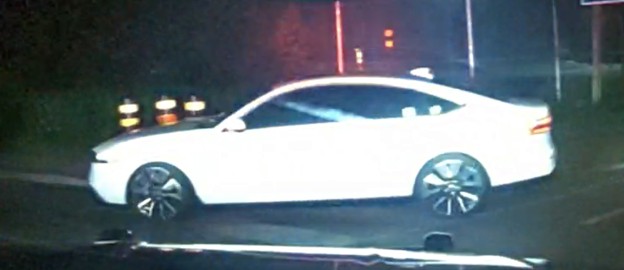
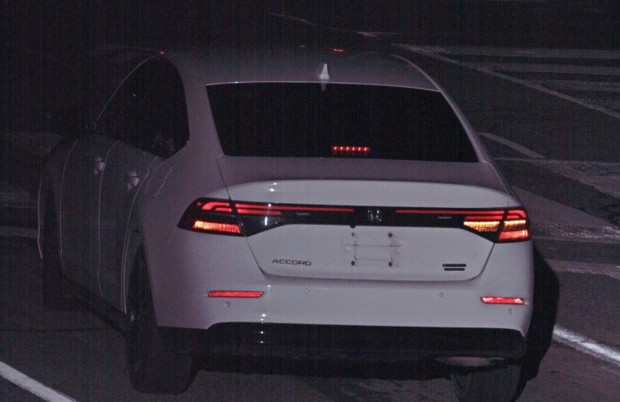
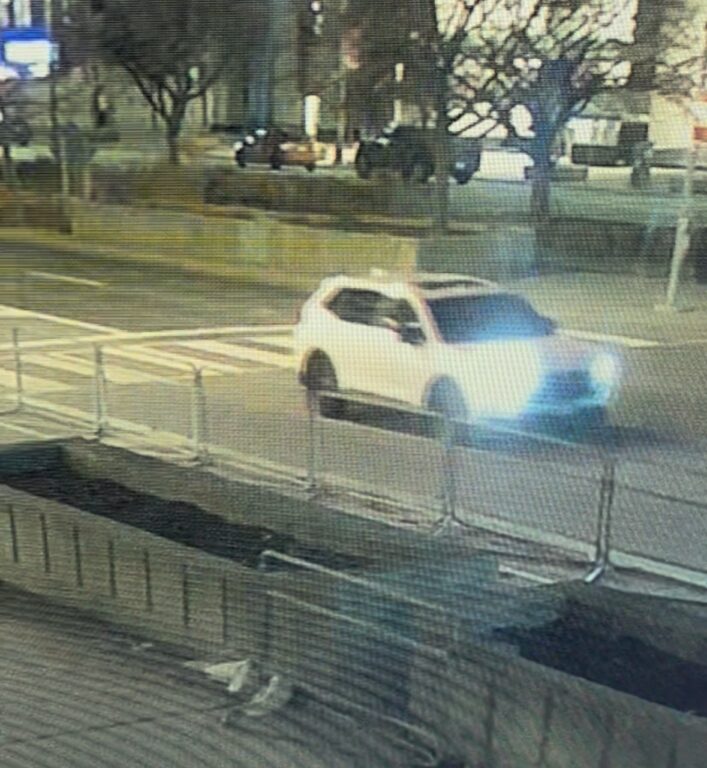
- they observed a newer-model white Honda Accord fleeing southbound on University Avenue
- police vehicles pursued the suspect vehicle eastbound on Gerrard Street and then northbound on the Don Valley Parkway
- the pursuit was discontinued near Don Mills Road in the interest of public safety
- officers at the scene located evidence of gunfire and damage was found on the stone façade above the front entrance of the building
- security personnel were inside the building at the time but no injuries were reported
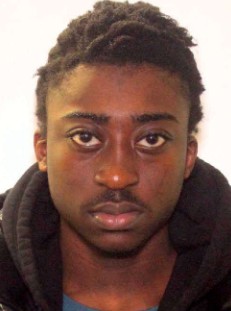
A couple of photos of the suspect vehicle were included with the release:
At the end of the presser, Olivia Chow mentioned that a police cruiser was sitting in front of the consulate with its lights flashing when the shooting happened. Sounds completely normal.
She also mentioned the scourge of “illegal American guns on our streets”, despite the fact that no one has yet been apprehended and ostensibly no firearms have been recovered. Maybe she knows more than she’s letting on?
These are minor details but, as before, stranger details follow.
To begin with, the Honda is described as having traveled south on University toward Queen, then turning on to Gerrard. A quick perusal of the location will quickly reveal that Gerrard is actually to the north of that intersection and pulling a U-turn requires crossing a median that can reliably be described as a thin, breezy, tree-lined park.
More interestingly, Gerrard has no on/off ramps for the DVP. Getting on to the Don Valley Parkway requires taking Hamilton Street, a narrow residential neighbourhood, south to Dundas and then taking the northbound on-ramp.
That’s some confident driving.
Police report that their pursuit was sometimes in excess of 140 km/h (87 mph), which was deemed too dangerous, so they ceased their pursuit at the Don Mills Road turnoff. Aerial support was unavailable at the time. In late rush-hour traffic, the stretch between Dundas and Don Mills takes about 10 minutes at the posted speed limit of 90 km/h (56 mph). Long story short, the chase was over quick.
A single shell casing was found at the scene on University, damage was noted on the consulate’s outer wall, and two oblivious “security personnel” were inside at the time of this incident. During the press conference it was reiterated that the consulate is a heavily fortified building.
That’s all we know for now but there’s undoubtedly more to come.
* I’ve been calling it an embassy but apparently that’s in Ottawa. LOL
_(cropped).jpg)


 ... with pictures
 ... with sounds
 ... with videos
 ... with opinions
 ... that's shorter
 ... that's longer