
Archive for the ‘ Pictures ’ Category

corona
Posted on July 8th, 2025 – Comments Off on corona Filed under: Dispatches, Patrick Bay, Pictures
papered over
Posted on July 6th, 2025 – Comments Off on papered over Filed under: Dispatches, Patrick Bay, Pictures
Chester, 66
Posted on July 5th, 2025 – Comments Off on Chester, 66Colour me nostalgic but wasn’t it was around this time last year that the cops were looking for William, 31?
I don’t know if the fuzz got their man (?) but this time around they’re looking for 66-year-old Chester who is 5’9″ with stocky build, bald, and walks with a limp. He was last seen wearing a white shirt, blue jeans and blue and white shoes. Seem familiar? Maybe the following image will help:

How hidden, really?
Posted on July 3rd, 2025 – Comments Off on How hidden, really?For example … ye ole’ Rob Ford coke story. TCL broke that shit 15 months before it was ever mentioned in the mainstream:
Also there was the “lost” statue at University of Toronto, except that TCL managed to somehow capture Vickie a full 7 years before an official from Buckingham Palace even noticed that she’d gone “missing”:
Sure was a long time ago. Wonder what else has been “uncovered” since then … 😎
A reminder …
Posted on July 1st, 2025 – Comments Off on A reminder …… that the fuzz is out in force today. Beware, Toronto!
Also, happy Canada Day or whatever.

rgb alley
Posted on June 30th, 2025 – Comments Off on rgb alley
(larger)
ball sports
Posted on June 30th, 2025 – Comments Off on ball sports
What and why? Excellent questions posed at Little Norway Park.
magic building
Posted on June 24th, 2025 – Comments Off on magic building Filed under: Dispatches, Patrick Bay, Pictures
Forking heck
Posted on June 21st, 2025 – Comments Off on Forking heck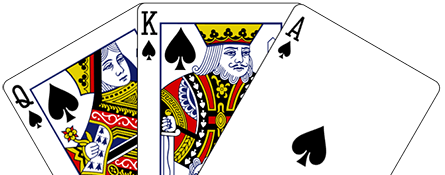
It was close to 10 years ago that I announced that I’d been working on a crypto-based, peer-to-peer poker project named CypherPoker. That initial version was written in a programming language called ActionScript which produced software for the now-defunct Flash platform.
I admit that I still have a soft spot for the language and the platform on which it ran (a.k.a. the runtime).
Not only did Flash allow me to produce code for a broad variety of operating systems and hardware, it was also very creatively expressive. The platform/runtime was originally a way to produce streaming audio and video content for the web which was a groundbreaking advancement for its time. With the addition of a robust programming language, those “movies” could be made to react to user input and that’s when things got really interesting.
A few years later I found myself working for an online casino company and realized that a product like provably fair online poker software that didn’t require a middleman (e.g. PokerStars), was singularly unique. So I set out to write CypherPoker. I learned a lot about cryptography and peer-to-peer networking and pretty soon I knew that the idea was viable.
However, although it solved a lot of the problems associated with such an endeavour, my solution didn’t answer the questions of: who enforces the rules if someone does cheat, and moreover, who holds the money (pot) during the game?
It was suggested that I use Ethereum for the answers. You may have heard of Ethereum due the popular cryptocurrency Ether but this is only one half of this particular blockchain. The other half is a set of fairly open-ended programming instructions (a.k.a. Turing-complete), that run the blockchain. Those instructions can be created using any number of programming languages — in my case one called Solidity — and the resulting programs are called smart contracts.
Because smart contracts are run across the entire Ethereum network, an incentive system was included to ensure that people participate (like all blockchains that I know of, Ethereum uses a cryptographic consensus model), hence the Ether cryptocurrency. If you want to store your code on the blockchain, you pay Ether. If you want to run that code, you pay Ether.
If smart contracts and Ether had hips they would literally be joined at them, so much so that even the most basic transactions on Ethereum (e.g. “send X amount of Ether to recipient Y”), require basic smart contracts to do their thing. It’s also why even these most basic transactions require a fee, payable in Ether.
In the process of developing smart contracts I learned how to create my own Ethereum blockchain, which could have helped to keep transaction costs minimal — at least initially. Due to the intrinsically speculative nature of cryptocurrencies, however, I expected the inevitable eventuality of the same problem that I encountered with the official Ethererum blockchain: playing a hand of poker would eventually become prohibitively expensive. In addition, the consensus model meant I’d need a network of people to help run the blockchain, which I didn’t have.
Nevertheless, I received positive, even enthusiastic comments on the project, and as of the last time I checked it had been starred (the equivalent of “likes“), 70 times on GitHub. Perhaps more importantly, it had been forked 13 times, which means that GitHub users copied the code into their own repositories for their own use, adaptation, etc.
Unfortunately, that rotten piece of shit Steve Jobs (my consistent opinion), bashed Flash and with the help of his drooling and ignorant minions helped to prematurely kill off the technology. I won’t go into the numerous reasons why most of what he’d written was pure crap but it doesn’t change the fact that Flash would ultimately be doomed. Plus, the price of Ether skyrocketed so even without any rake the smart contracts were useful for only very high-stakes games in which expensive blockchain fees would make sense.

So, some years later when browsers began to offer some of the functionality that previously only Flash could offer, I decided to re-write the game for JavaScript. Thankfully, the similarity in names between the two programming languages is more than just coincidence. Not only do they both look and feel similar but they’re functionally related.
In fact, an ActionScript developer would often have to also learn JavaScript since Flash content tended to run within a browser window, and browsers use JavaScript to make web pages functional (i.e. more than just static content). In other words, the ActionScript runtime (Flash) was often embedded in a JavaScript runtime (browser), although this wasn’t always the case.
Sufficed to say, other than having to code everything again, going from one language and runtime to another wasn’t a huge leap. I learned a bunch of lessons in the development of the ActionScript version so its follow-up was produced considerably more quickly and robustly.
Instead of incorporating smart contracts directly, I created a plugin architecture into which they could eventually be slotted and wrote a module using Node.js (another JavaScript runtime), to act as a stand-in. Due to its popularity I added support for Bitcoin which, unlike Ethereum, comes with a highly restrictive set of programming instructions (not even close to Turing-complete), called Script.
With Bitcoin, instead of smart contracts someone would have to assume the role of a “trusted banker and game verifier”. It wasn’t ideal but would allow for completely private games, albeit with someone playing the role of a trusted third party. Besides, I figured, I’d written the smart contracts once and I should be able to dust them off at some point and slot them in.
However, that never happened.
Ether is still way too expensive and I’m no nearer to having enough people to help me create a CypherPoker blockchain so I added support for Bitcoin Cash (a cryptocurrency similar to Bitcoin), tidied up the code, updated the documentation so that anyone else could adapt it, and shelved the project. At this point it has been sitting idle on GitHub for about 6 years.
A couple of days ago I had a look at the repository and was pleasantly surprised to see that it had been starred 106 times and forked 44 times, twice this year and 5 times last year. In addition, 13 people have set a “watch” on the repository so that they can be alerted should it ever be updated.
Between the original CypherPoker and the newer CypherPoker.js, the project has been starred 176 times and forked 127 times with a total of 23 people watching.
Every once in a while I also receive a comment telling me that someone has implemented some changes or done something interesting with CypherPoker.js
As recently as the 6th of this month, for example, someone added a “spectator mode” to the game (not sure if this is a good idea), and someone else claimed that they used the project as a basis for their university thesis (LOL … I’m a Canadian college dropout!)
Altogether, it’s nice to know that the interest is still there.
If you or anyone you know share this interest, drop me a note and maybe we can resuscitate what I still consider to be a unique and very promising project.

 ... with pictures
 ... with sounds
 ... with videos
 ... with opinions
 ... that's shorter
 ... that's longer