
Toronto the old
Posted on July 9th, 2026 –
Given the implications, it’s odd that I haven’t seen the following information being discussed in any major Toronto publications or blogs. According to a mid-February post on the Better Dwelling website, roughly 1 in 6 people in Toronto are seniors over the age of 65, outnumbering kids (aged 0-14). The fact that seniors make up about 17% of Toronto’s population may not seem particularly alarming until one looks at the trend:
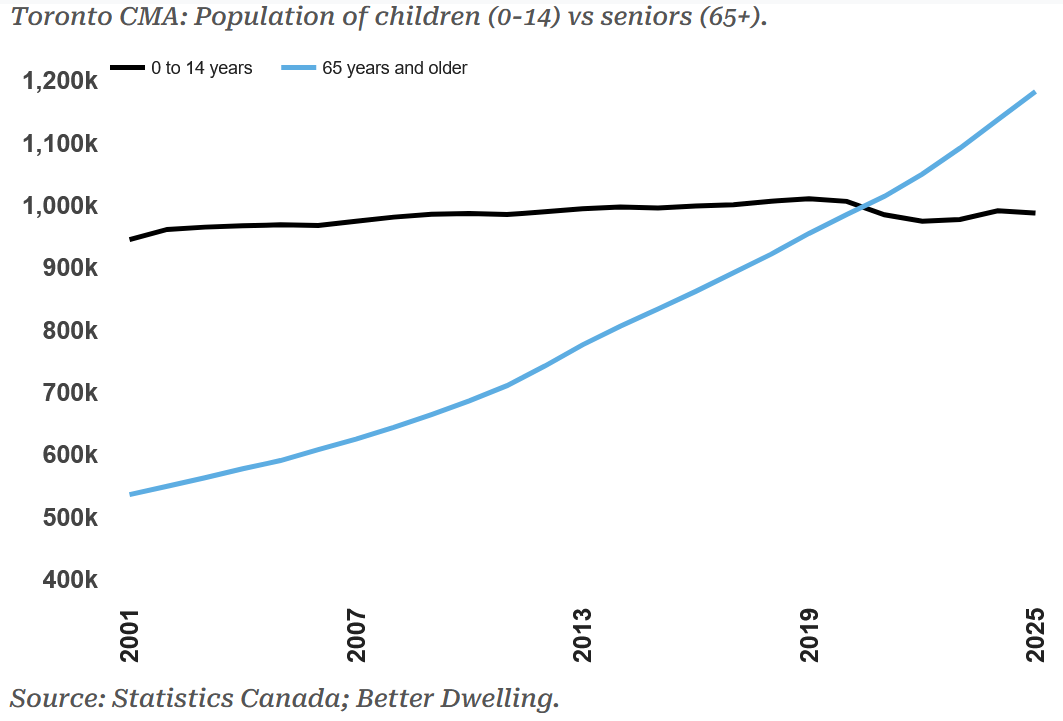
The problem here is that the system requires youths to subsidize geriatrics (via taxes, etc.) and the systemic imbalance in this arrangement is growing. As noted in Better Dwelling’s analysis, “A key ratio when analyzing an economy is the ratio of new workforce entrants (age 20 to 24) to exits (60 to 64). Entrants, who are soon-to-be first-time home buyers and about to enter family formation years—need to outpace lost experience and maintain productivity. When they don’t, it signals economic drag ahead.“
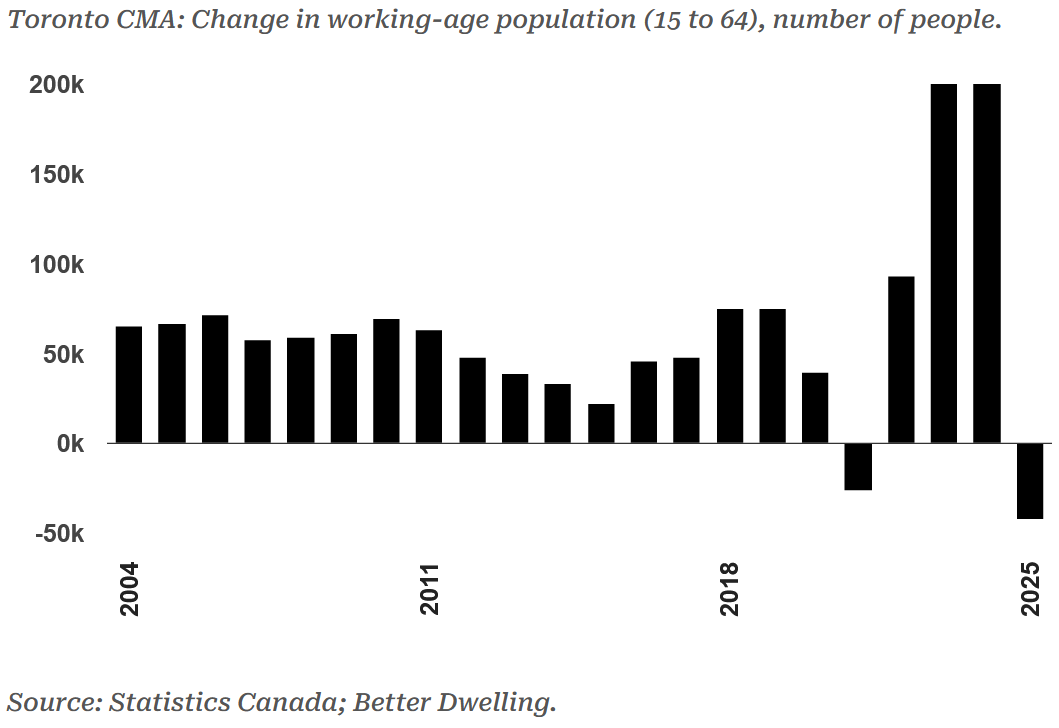
The current data indicates that, “Entrants fell 4.6% (-25.6k) to 557.6k in 2025, while exits climbed 1.4% (+5.9k) to 439.7k. Even with temporary residents inflating the near-term count, the ratio is approaching critical levels [and] The interprovincial migration trend worsens the issue.“
Better Dwelling’s analysis claims that, “Returning to the destabilizing immigration targets may be the first reaction of many policymakers, but it only temporarily improves the short-term optics while creating a bigger dependency issue.“
In its conclusion the report says that even if the government managed to “correct course” right now, it would still take decades for the city and surrounding regions to pull out of the morass.
Translation: interesting times lie ahead for Toronto.

 ... with pictures
 ... with sounds
 ... with videos
 ... with opinions
 ... that's shorter
 ... that's longer